
What Is Surveillance? A Guide to Private Investigator Surveillance in the UK
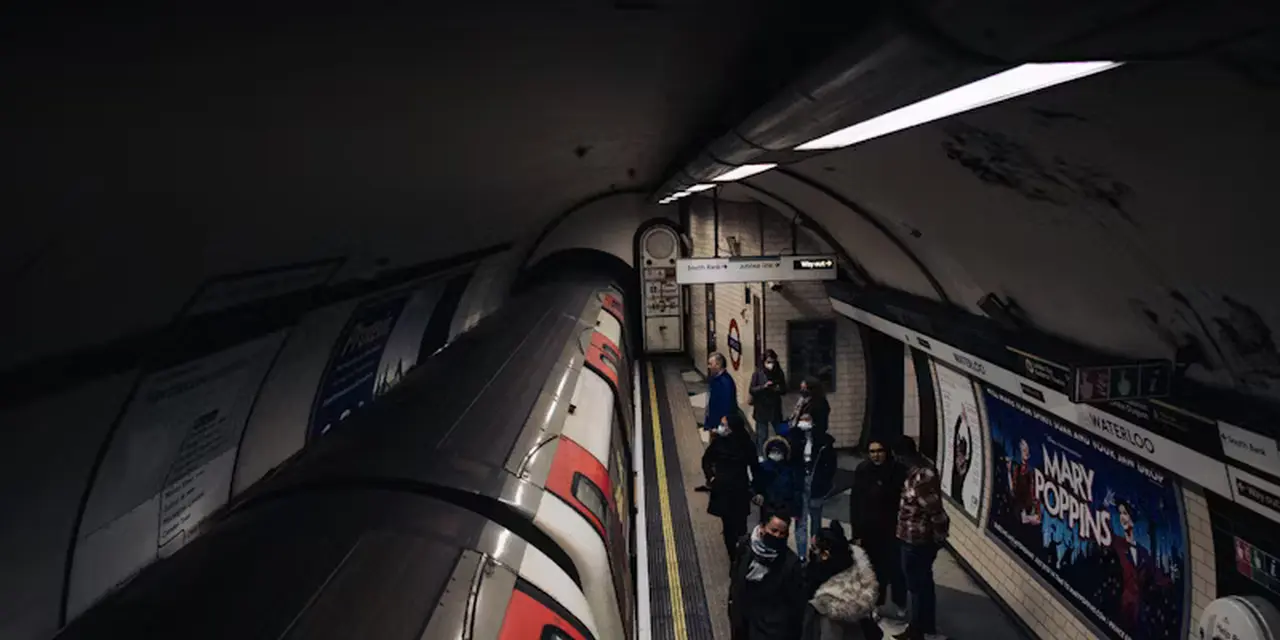
Surveillance is the discreet observation of a person, vehicle, location or activity for the purpose of establishing factual information.
In professional investigations, surveillance may be used when a business, solicitor, insurer or private client needs to understand what is happening in circumstances where records, interviews or conventional enquiries cannot provide the full picture.
An investigator might document where a person travels, who they meet, when they arrive or leave a location, or activities that can legitimately be observed during an assignment.
The objective is not to create a predetermined outcome or prove a client's suspicion.
Professional surveillance should establish and document facts.
Conflict International provides Professional Surveillance Services throughout the UK and internationally for corporate, legal, insurance and private-client matters.
How Does Private Investigator Surveillance Work?
A surveillance assignment normally begins with a specific objective.
Rather than simply asking investigators to “follow someone”, the client should be able to explain what information they need to establish and why it is relevant.
For example, the objective could be to determine whether:
- An individual regularly visits a particular location.
- A person is meeting another identified individual.
- Activity appears inconsistent with information provided in a civil claim.
- An employee is undertaking activity relevant to an investigation.
- A person appears to be residing at a particular address.
- Particular movements or meetings relevant to litigation can be documented.
The investigators can then plan an operation around that objective.
The circumstances will determine the number of operatives required, the locations involved, the anticipated movements of the subject and whether static, mobile or a combination of surveillance methods is appropriate.
What Is Static Surveillance?
Static surveillance involves observing a location from an appropriate fixed position.
It may be used when investigators expect relevant activity to occur around a particular address, workplace or other location.
For example, investigators may document:
- Arrivals and departures.
- Vehicles associated with a location.
- Meetings between individuals.
- Movements from a known address.
- Activity relevant to the purpose of the investigation.
Static surveillance does not necessarily mean remaining in one position throughout an assignment.
If the subject leaves the location, investigators may need to transition into mobile surveillance.
What Is Mobile Surveillance?
Mobile surveillance involves maintaining discreet observation as a subject moves between locations.
This can take place:
- On foot.
- By vehicle.
- On public transport.
- Through a combination of different methods.
Mobile surveillance requires careful coordination.
A subject may change direction, enter crowded areas, use several forms of transport or travel somewhere where continued observation becomes impractical.
In some circumstances, more than one surveillance operative or vehicle may be required to maintain effective coverage without unnecessarily increasing the risk of detection.
What Can Surveillance Establish?
Surveillance is particularly useful for establishing observable facts.
Depending on the assignment, it may document:
- Where someone went.
- When they arrived or departed.
- How long they remained at a location.
- Who they appeared to meet.
- Vehicles they used.
- Activities observed during the operation.
- Patterns of movement across several periods of surveillance.
- Photographic or video evidence of relevant events.
But surveillance has limits.
Seeing two people together does not necessarily establish the nature of their relationship.
Seeing someone perform an activity on one occasion does not necessarily establish what they are capable of doing consistently.
Observing a person enter a business does not prove why they were there.
A professional surveillance report should therefore distinguish between what was observed and assumptions that cannot reasonably be supported by those observations.
When Is Professional Surveillance Used?
There are many legitimate circumstances in which surveillance may form part of a broader investigation.
Corporate and Employee Matters
Businesses may consider surveillance where there is a defined concern involving suspected misconduct or activity relevant to an internal investigation.
Examples can include:
- Suspected unauthorised secondary employment.
- Theft or misuse of company assets.
- Breaches of restrictive covenants.
- Activity relevant to an absence or employment investigation.
- Suspected fraud.
- Other specific contractual or misconduct concerns.
Employee surveillance requires particular caution.
The ICO makes clear that covert monitoring of workers should be exceptional, justified and appropriately limited. It should not continue after the investigation for which it was introduced has concluded.
The existence of an employment relationship does not give an organisation unrestricted freedom to monitor an employee.
Insurance and Personal Injury Claims
Surveillance may be used in connection with insurance or personal injury investigations where there is a legitimate need to document activities relevant to representations being made in a claim.
For example, an investigator might record activity occurring in publicly observable circumstances during an agreed period.
The footage should then be considered alongside the wider evidence.
A limited period of surveillance cannot establish everything someone can or cannot do, and investigators should avoid drawing medical or other conclusions that the observations do not support.
Litigation Support
Solicitors and litigation teams may use surveillance where independently documented observations could assist with an ongoing civil dispute.
Potential applications include:
- Personal injury litigation.
- Matrimonial proceedings.
- Cohabitation disputes.
- Employment matters.
- Contractual disputes.
- Insurance claims.
- Other civil proceedings.
Whether surveillance material is ultimately relevant or admissible depends on the circumstances and the applicable evidential and procedural rules.
Investigators therefore should not guarantee that material they obtain will automatically be accepted by a court.
Matrimonial and Private Matters
Private clients sometimes instruct surveillance when they require factual information concerning a partner, former partner or another individual connected with a legitimate personal matter.
Possible objectives can include establishing:
- Patterns of movement.
- Meetings.
- Cohabitation.
- Visits to particular locations.
- Other activity directly relevant to the client's circumstances.
Surveillance should not become an unrestricted examination of somebody's private life.
The purpose of the assignment and the methods used should be defined before surveillance begins.
Is Private Investigator Surveillance Legal in the UK?
Professional surveillance is not governed by one simple rule stating that observation is either universally legal or illegal.
A number of legal and regulatory considerations can be relevant depending on what is being done, why it is being done and what information is collected.
These include data-protection and privacy considerations.
Personal information concerning identifiable individuals falls within the UK data-protection framework, and organisations using surveillance need to consider matters such as lawful basis, necessity, proportionality and data minimisation. The ICO has also approved a dedicated UK GDPR Code of Conduct for the private investigation and litigation-support sector.
This is why a professional surveillance operation should begin with a legitimate, defined objective rather than a general instruction to gather as much information as possible about somebody.
Does RIPA Apply to Private Investigators?
The Regulation of Investigatory Powers Act 2000 is frequently mentioned when discussing covert surveillance.
However, it is important not to describe RIPA as though it gives private investigators surveillance powers.
The statutory covert-surveillance authorisation framework described in the government's code of practice is principally concerned with surveillance undertaken by public authorities and other bodies operating under the legislation.
Private investigators do not obtain special law-enforcement powers simply because they have been instructed to conduct surveillance.
Their activities must instead be considered within the wider legal framework applicable to the circumstances of the case.
Can Investigators Film Someone in Public?
Professional surveillance frequently involves recording activity that can be observed from places where the investigator is legitimately present.
However, the fact that an individual is in public does not mean privacy and data-protection considerations disappear completely.
Context matters.
Repeated or systematic collection of information can reveal considerably more about an individual than a single observation. Government guidance itself recognises that the accumulation of observations may result in obtaining private information.
Investigators therefore need to consider what they are recording, why it is relevant and whether the level of observation is proportionate to the legitimate objective.
What About GPS Tracking?
GPS and other tracking technology raises additional legal and privacy considerations.
It is therefore unhelpful to reduce the subject to a simplistic statement such as “GPS tracking is legal” or “GPS tracking is illegal”.
Relevant considerations can include ownership and control of the vehicle or property, the purpose of the tracking, the information being collected, data-protection requirements and the circumstances in which equipment would need to be installed.
The ICO-approved industry code specifically recognises tracking devices as a form of invisible processing requiring an appropriate lawful basis and compliance framework.
Any proposal involving a tracking device should therefore be assessed individually rather than assumed to be permissible simply because surveillance has been instructed.
Surveillance and Counter-Surveillance Are Different
Surveillance should not be confused with Counter-Surveillance or Technical Surveillance Counter Measures.
Surveillance is concerned with observing and documenting relevant activity.
TSCM and counter-surveillance are concerned with identifying potential technical surveillance threats, such as concealed listening devices or other unauthorised monitoring equipment.
They are separate disciplines and should not be treated as interchangeable services.
What Does a Surveillance Report Contain?
After an operation, the client should receive a clear factual account of what happened.
Depending on the assignment, a surveillance report may contain:
- Dates and times.
- Relevant locations.
- Chronological observations.
- Movements of the subject.
- Vehicle information.
- Details of relevant meetings.
- Photographs.
- Video footage where obtained.
- Operational limitations or periods when observation was lost.
The report should identify facts clearly and avoid presenting assumptions as established findings.
If another person cannot reliably be identified from the available evidence, the report should reflect that uncertainty.
How Long Does Surveillance Take?
There is no standard duration for every assignment.
A surveillance operation may last several hours, a full day or require observations across multiple dates.
The appropriate duration depends on what needs to be established.
For example, one period of surveillance might answer a narrow question about whether a person attends a known location.
Establishing a recurring pattern of activity may require observations on several occasions.
Clients should also understand that surveillance cannot guarantee that the relevant activity will take place during the period instructed.
What Information Does a Surveillance Investigator Need?
The quality of the initial information can materially affect an operation.
Useful information may include:
- The subject's full name.
- A recent photograph.
- Known addresses.
- Vehicle details.
- Employment information where relevant.
- Known routines.
- Relevant dates and locations.
- The specific issue being investigated.
- Details of previous events relevant to the assignment.
Clients should provide information they legitimately hold and explain where information may be uncertain.
The surveillance provider can then assess what is relevant to the proposed operation.
Choosing a Professional Surveillance Provider
Surveillance involves sensitive personal information and can have significant consequences for the people involved.
When selecting a provider, consider whether they:
- Clearly establish the purpose of the instruction.
- Explain what surveillance can realistically achieve.
- Consider privacy and data-protection requirements.
- Use experienced surveillance operatives.
- Have appropriate procedures for handling sensitive information.
- Provide clear written reporting.
- Distinguish observed facts from assumptions.
- Explain limitations rather than guaranteeing results.
- Can coordinate operations in the jurisdictions involved.
Be cautious of any provider promising a guaranteed outcome or claiming they can obtain any information requested regardless of the circumstances.
Professional Surveillance Services
Surveillance can provide valuable factual information when conventional enquiries cannot establish what is happening.
Its value comes from careful planning, discreet observation and accurate reporting rather than from assumptions about what an investigation is expected to find.
Conflict International provides professional surveillance services for corporate, legal, insurance and private-client matters throughout the UK and internationally.
If you need to establish whether surveillance is appropriate for your situation, visit our Surveillance Services page to learn more about how we can assist.
Complete the enquiry form below to discuss your surveillance requirements in confidence.